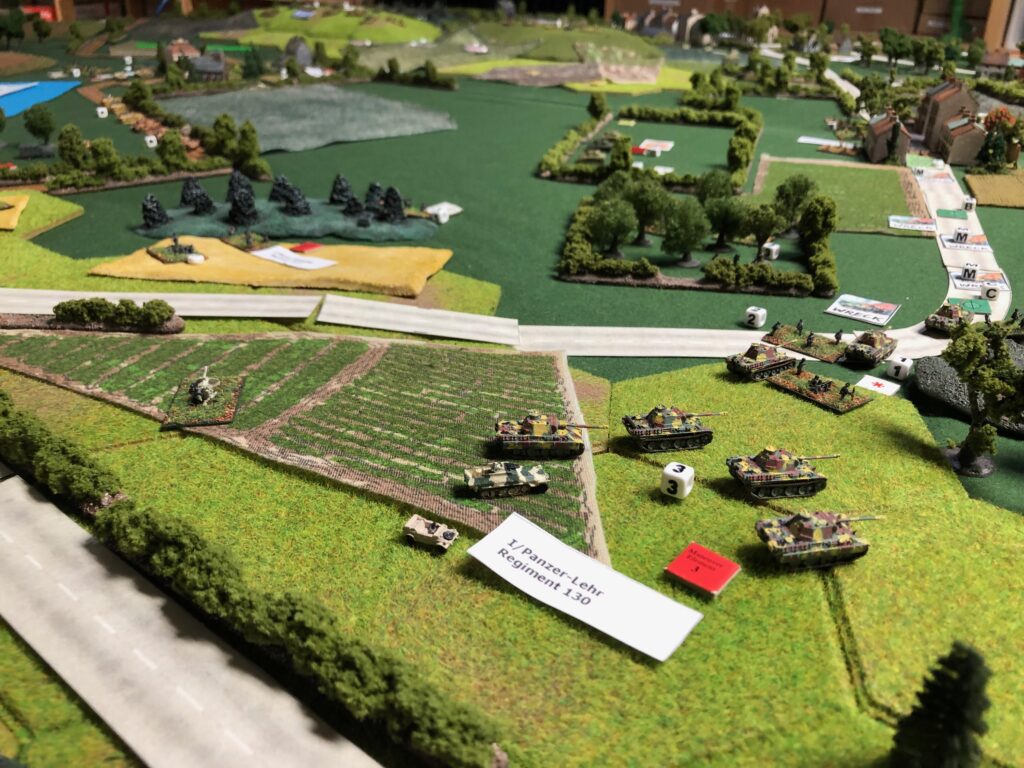
Miniature Wargaming the Lorraine Campaign
Starting with this posting we will look at scenario development, types of forces, terrain and weather considerations, and special rules for wargaming operations in the Lorraine campaign.
Challenging Scenarios
Scenarios from the Lorraine campaign offer wargamers a wide range of military operations to challenge their generalship. These include:
Assaults across defended waterways — Over the Moselle by the US 5th Infantry Division at Dornot and Arnaville; the 80th Infantry Division at Pont-à-Mousson and Dieulouard; and the 90th Infantry Division at Thionville. Additional crossings by Third Army were made over the Seille River, Osson Creek, and the Nied-Française River during the advance toward Germany.
Armored battles on good tank terrain — The French 2nd Armored Division at Dompaire and the series of panzer counterattacks to eliminate US XII Corps bridgeheads over the Moselle including Arracourt (the largest armor clash between Normandy and the Battle of the Bulge).
Assaults against and defense in fortifications — Upon the Metz Forts and field fortifications from the First World War on Delme Ridge, against the Maginot Line, and upon the German West Wall along the Saar River and along the Orscholz Switch Line south of Trier, Germany.
Offensive and defensive actions inside dense woods — In the forests of Grémecey, Château-Salins, and the Bride et de Koecking, among others.
Offensive and defensive actions in urban areas — the cities of Metz and Lunéville.
Lorraine scenarios offer challenges including logistical constraints, maneuvering over mud and flooded terrain, weather constraints on air support, sustaining advances over multiple waterways, large-scale operations in compartmented and fortified areas, and concentrating forces to sustain momentum before reaching the culminating point short of distant objectives.
Sources for Scenarios
Cole’s The Lorraine Campaign provides a wealth of detailed information for selecting battles to be fought within the larger context of the campaign. Charles B. McDonald’s and Sidney F. Mathews’ Three Battles: Arnaville, Altuzo, and Schmidt, published in 1952 and reprinted in 1993 by the US Army Center of Military History is an essential reference for wargaming the assault crossing of the Moselle at Arnaville.
John Nelson Rickard’s Patton at Bay is also a great source for selecting scenarios, as is Nathan N. Prefer’s Patton’s Ghost Corps for the later part of the campaign and its 1945 resumption against the West Wall along the Saar River. The maps in John A. Adams’ The Battle for Western Europe, Fall 1944 — An Operational Assessment offers suggestions for alternative operational plans for those interested in “what if” scenarios.
Osprey Publishing has several volumes that are helpful in selecting and developing scenarios. Two of Steven J. Zaloga’s books in the Campaign series, Lorraine 1944 — Patton vs Manteuffel and Metz 1944 — Patton’s Fortified Nemesis are excellent sources of information to the miniature wargamer. Zaloga’s Panzergrenadier Versus US Armored Infantryman (2017) in the Combat Series includes a chronology and maps for an engagement that was part of the Arracourt tank battle, Réchicourt-la-Petit, September 26-29, 1944. Division Leclerc — The Leclerc Column and the Free French 2nd Armored Division, 1940-1946 (2018) by M.P. Robinson and Thomas Seignon in the Elite series provides the task organization and operational summary of this division at Dompaire.
Command Decision’s Test of Battle scenario book From Normandy to Lorraine — The American Drive to the Rhine (2011) includes Scenario 8 — Forcing the Moselle, which covers the assault crossing at Arnaville, is much more of a tactical rather than a tactical/operational game. Two scenarios closer in line with battles fought within the context of a campaign is provided in Panzer Korps’ Campaigns (2008). “Lorraine 1944” provides gaming information, special rules, and an impressively detailed order of battle covering the September operations and “Patton’s Hammer: XXth Corps” provides the same for the November operations against Metz. My sense is that this scenario information can be easily adapted to any miniature wargaming ruleset.
Michael Haught’s and Phil Yates’ Blood, Guts, and Glory: Tank Battles in Lorraine, September 1944 — January 1945, published by Flames of War, the World War II Miniatures Game in 2012 provides helpful information on unit histories, tables of organization, and special rules that will add to scenario development.
Forces
US Army — Third Army initially is comprised of divisions that fought in Normandy and Brittany and, later, by divisions new to combat. The most recent experience of Third Army was the largely uncontested pursuit of a shattered enemy from Normandy to the Moselle River. This unexpected success provided a fleeting opportunity to drive deep into Germany and possibly end the war before the enemy could regroup. However, the logistical situation, the relatively small size of Third Army (initially 2 armored and 4 infantry divisions and never more than 3 armored and 5 infantry divisions during the critical period), and the absence of an operational reserve at Army, Army Group, or SHAEF-levels made operational and strategic success unlikely.
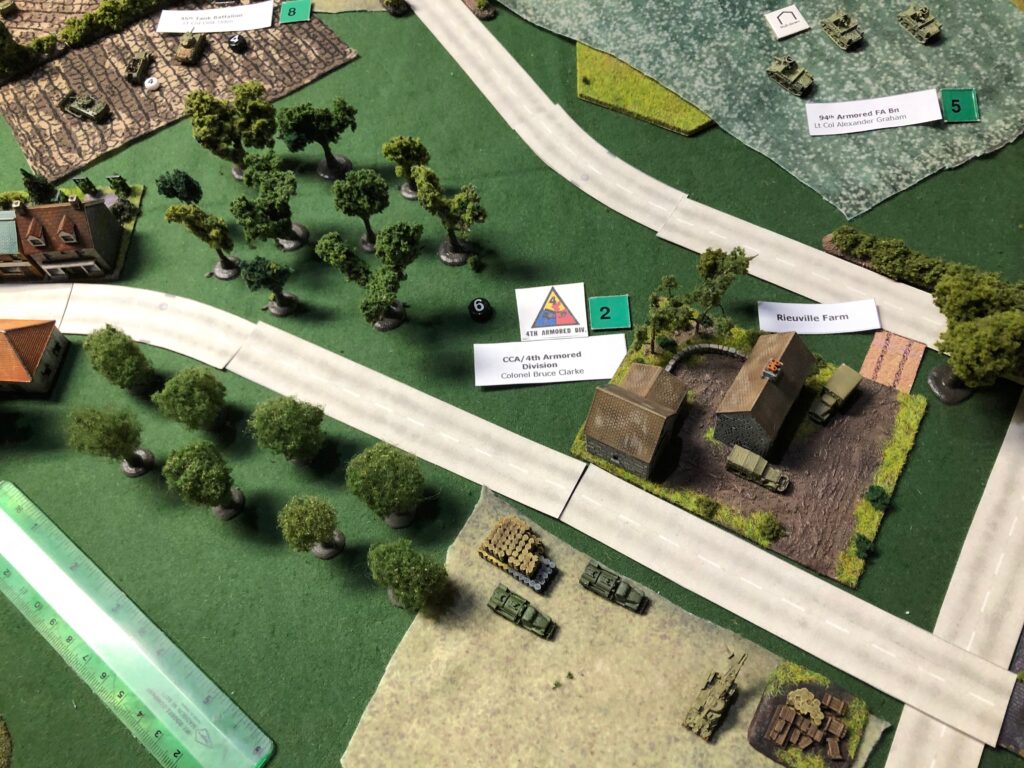
American commanders from Patton downward faced great difficulty — and missed opportunities — in concentrating their strength to break through the Germans and strike out for the objectives — the Rhine and, ultimately, Frankfurt-am-Main. Attacks were made along broad fronts with little depth in combat power and invariably culminated short of their objectives. In short, Third Army was surprisingly ineffective at the operational level and casualties were particularly high among the infantry. However, American artillery, armor, and combat engineers made great contributions during the campaign. Moreover, Third Army learned considerable operational and tactical lessons that were put to good use when in the Ardennes in December.
German Army — The initial German forces were a mix of divisions that retreated across France. Over time these were bolstered by newly formed volks grenadier and a hastily formed division based largely on officer and NCO candidates. These formations performed surprisingly well. Most German formations were well below their authorized strength and had serious material shortages as well.
Two highly capable panzer grenadier divisions arrived from Italy and the largest concentration of panzer divisions and newly formed (albeit with poor combined arms capability) panzer brigades on the Western Front soon confronted the Third Army. Although at the operational level the Germans had a difficult time coordinating their September panzer counteroffensive, they again demonstrated high tactical proficiency, especially when on the defensive.
The Battlefield
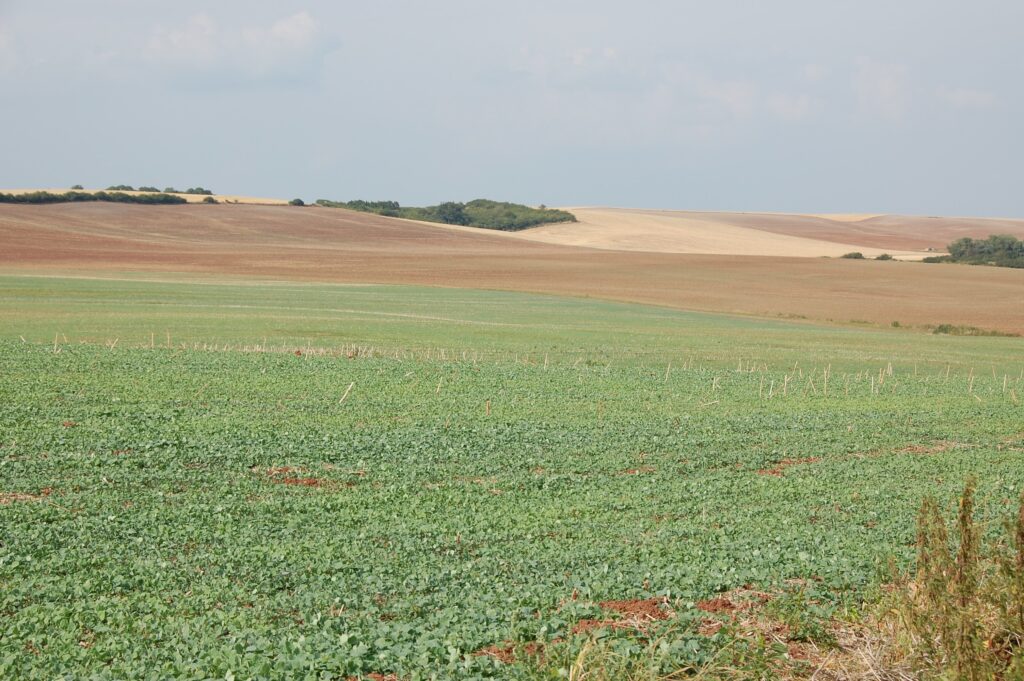
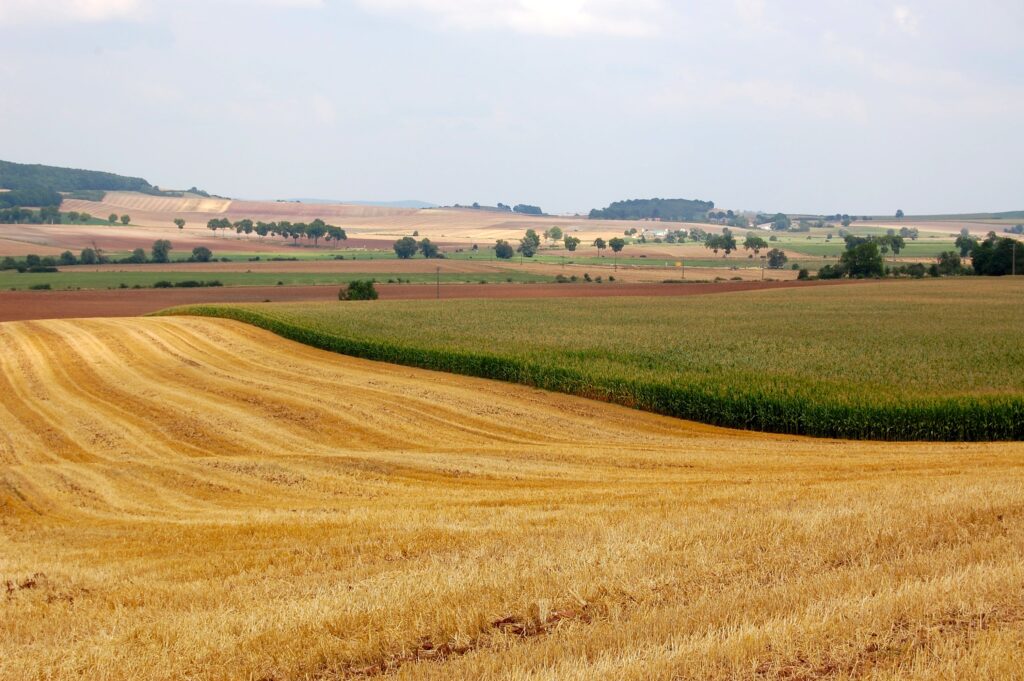
Replicating the Lorraine terrain in miniature is relatively simple to do. The Moselle valley is a bit tricky given its width (including a parallel running canal), but the high ground is not difficult to replicate with stackable fixed-size hills; Hexon II Terrain Boards make this simple. The road and rail networks are easy to replicate. The US Army official history of the campaign provides excellent maps to guide the process of setting up the battlefield, as do the Osprey books covering the campaign.
Weather — Records from the 90 year period prior to WWII show that September is the start of the rainy season with October having the greatest rainfall. The average monthly precipitation from September through November is between 2.4 and 3.0 inches. However, in 1944, the monthly rainfall was two and three times higher. In November of that year it was just short of 7 inches. If close air support is an essential part of your wargaming, the Lorraine Campaign may not be for you! Soft ground, mud, and flooded lowlands had a significant negative impact on movement negating (more so for the Americans than the Germans) the otherwise “good” tank country. To accurately reflect this, rules for fog (and getting lost in fog) and becoming mired and free of mud must be included.
Fortifications — Depending upon the setting of the scenarios you choose, you may need to replicate aboveground and partially buried forts around Metz; the gros (large) and petit (small) ouvrages of the Maginot Line; or the West Wall anti-tank obstacles and bunkers. However, much of the campaign was fought some distance away from these permanent fortifications. Extensive fighting took place here in 1914-18, and field entrenchments from that period were used by the Germans. For information on the characteristics of these fortifications, see Kaufmann, J.E., et. al.; Pen & Sword’s The Maginot Line — History and Guide (2011); Kaufmann, J.E. and Kaufmann, H.W.; Fortress France — The Maginot Line and the French Defenses in WWII, published by Stackpole Books (2006); and two books in Osprey Publishing’s Fortress series: Clayton Donnell’s The German Fortress of Metz 1870-1944 (2008) and Neil Short’s Germany’s West Wall — The Siegfried Line (2004).
Looking Ahead
The Lorraine campaign case study will continue with a focus on the crossings of the Moselle River by the Third Army in September 1944. At the strategic level, the focus will be on Patton’s battle plan for “jumping” the Moselle and the Rhine to maintain the momentum of the advance across France all the way to Frankfurt, Germany. At the operational level, the focus shifts to the difficulties Patton faced in concentrating an army too small and inadequately supplied to carry out his intended deep battle. The case study will conclude with an operational/tactical level miniature wargame scenario or two that will challenge the attacker and defender.